You want a fish tank that looks gorgeous and doesn’t turn into a green swamp by week two, right? Good news: you can absolutely do this without a chemistry degree or a second mortgage. Start small, plan smart, and let the water do the heavy lifting. By the end of this guide, you’ll know exactly what to buy, how to set it up, and when to chill and let nature do its thing.
Pick the Right Tank (Size Matters… a Lot)
Bigger tanks actually make life easier. Wild, I know. A 20-gallon tank gives you stable water conditions and more room for error, while a 5-gallon punishes every tiny mistake.
- Beginners: 20 gallons is the sweet spot. Roomy, forgiving, and still apartment-friendly.
- Shape: Go for a standard rectangle. Tall columns look cool but limit surface area (oxygen) and swimming space.
- Material: Glass = scratch-resistant. Acrylic = lighter, clearer, but scratches easier.
What About Nano Tanks?
They look adorable, but IMO they require more attention. Temp swings, ammonia spikes, and overfeeding hit small volumes fast. If you insist, pick hardy nano species and keep your maintenance tight.
Gear You Actually Need (and What’s Optional)
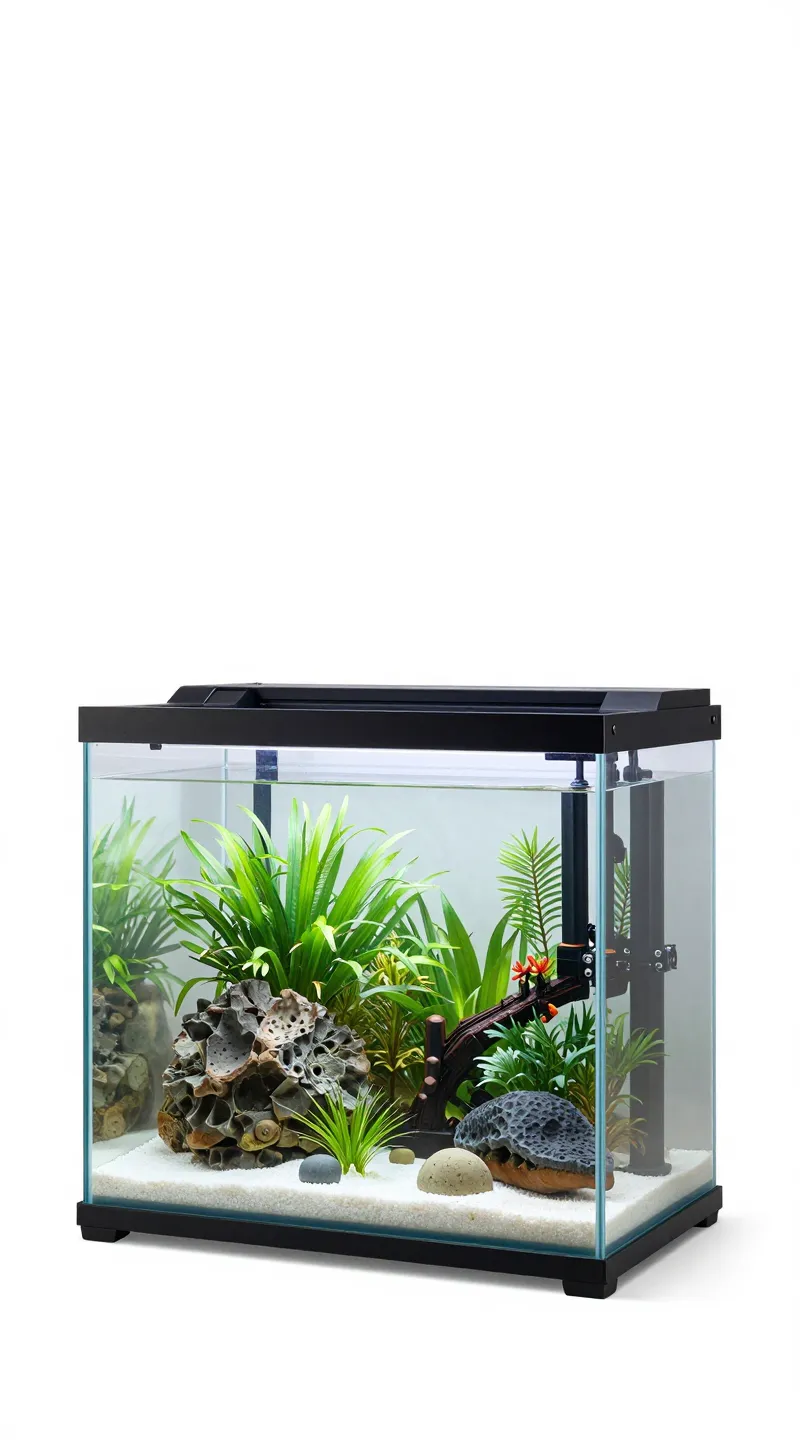
You don’t need a spaceship. Just solid basics that work.
- Filter: Choose a filter rated for a bit more than your tank volume. Hang-on-back or sponge filters work great for beginners.
- Heater: Get an adjustable heater. Aim for 76–78°F for most tropical fish.
- Thermometer: Cheap, necessary. Stick-on or digital works.
- Substrate: Fine gravel or sand. 1–2 inches deep.
- Light: LED with a timer. Your fish need day/night cycles. Your plants will thank you.
- Water Conditioner: Removes chlorine/chloramine from tap water. Non-negotiable.
- Test Kit: Liquid test kit for ammonia, nitrite, nitrate, pH. Strips are okay for quick checks, but liquid = more accurate.
- Optional: Air pump and stone (extra oxygen), plant fertilizer, and a lid (fish jump!).
Filters Decoded
– Sponge filter: Cheap, reliable, shrimp and fry-safe. Great biological filtration.
– Hang-on-back: Easy to clean, strong flow, fits most tanks.
– Canister: Overkill for small tanks but amazing for 40+ gallons.
Plan Your Stock: Don’t Build a Fishy Hunger Games
Pick fish that want the same conditions and won’t bully each other. Research saves lives (and cash).
- Hardy beginner options: Livebearers (platies), zebra danios, harlequin rasboras, corydoras, honey gourami, white cloud minnows.
- Avoid (for now): Goldfish (big waste machines), Oscars (tank-busters), tiny tanks with bettas and incompatible tankmates.
- Rule of thumb: Stock slowly. Start with a small group, observe, then add more over weeks.
Plants: Real or Fake?
– Real plants help with water quality and look amazing. Start with easy ones: Java fern, Anubias, Amazon sword, Vallisneria.
– Fake plants work fine too—just avoid sharp edges that can tear fins.
Set Up Day: Step-by-Step

Here’s your process. No shortcuts, no stress.
- Place the tank on a level surface away from windows (algae magnet) and vents (temperature swings).
- Rinse substrate until water runs mostly clear. Add to tank: 1–2 inches.
- Hardscape time: Add rocks and driftwood. Build stable structures before water goes in.
- Install equipment: Filter, heater, thermometer. Don’t plug anything in yet.
- Fill with water slowly onto a plate or plastic bag to avoid substrate craters. Add water conditioner.
- Plant or decorate: Put taller plants in back, shorter up front. Easy on the clutter—fish need swimming lanes.
- Turn everything on and check temperature and flow. Adjust heater to 76–78°F.
Pro Tip: Set a Light Schedule
Use a timer for 6–8 hours of light daily to start. More light = more algae until your tank stabilizes.
Cycling: The “Invisible” Step That Prevents Fish Tragedy
Cycling grows beneficial bacteria that convert toxic fish waste into safer compounds. Skip it and your fish suffer—hard pass, IMO.
- Fishless cycle: Add bottled ammonia or fish food to feed bacteria without risking fish.
- Test every few days: You want to see ammonia rise, then nitrite, then nitrate.
- End goal: Ammonia = 0 ppm, Nitrite = 0 ppm, Nitrate = under 20–40 ppm.
- Timeframe: 2–4 weeks typically. Bottled bacteria can speed things up, FYI.
How to Fishless Cycle (Simple Version)
– Dose ammonia to about 2 ppm on day one.
– Test every 2–3 days. When ammonia drops and nitrite appears, keep dosing small amounts to feed bacteria.
– When the tank can process 2 ppm ammonia to nitrate within 24 hours, you’re cycled. Do a big water change to bring nitrates down, then add fish.
Adding Your Fish (Slow and Steady Wins Here)

You cycled? Nice. Now don’t ruin it by dumping in 20 fish at once.
- Start small: Add the first group (like 6 rasboras or 8 endlers).
- Acclimate: Float the bag for 15–20 minutes to match temperature. Then slowly mix tank water into the bag for another 15–20 minutes.
- Net and release: Net the fish out of the bag and put them in the tank. Don’t pour store water into your tank.
- Wait 1–2 weeks and test water before adding more.
Feeding: Less Is More
– Feed tiny amounts the fish finish in 30–60 seconds, once or twice daily.
– Rotate quality foods: flakes, pellets, frozen daphnia/brine shrimp.
– Overfeeding = algae, cloudy water, and drama.
Maintenance That Doesn’t Eat Your Weekend
Consistency beats heroics. You don’t need complicated rituals.
- Weekly: Test water, clean glass, and change 25–35% of the water with dechlorinated tap water.
- Gravel vacuum: Lightly vacuum the substrate during water changes.
- Filter care: Rinse filter media in a bucket of tank water monthly. Don’t replace everything at once—you’ll toss your bacteria.
- Plant trim: Snip dead leaves and replant trimmings as needed.
Common Oops Moments (And Fixes)
– Cloudy water: Often a bacterial bloom. Wait it out and keep feeding light.
– Algae bloom: Cut light hours, reduce feeding, and step up water changes.
– High ammonia/nitrite: Immediate water change, stop feeding, and test daily. Add bottled bacteria if needed.
Beginner Stocking Ideas That Work

You want peaceful, colorful, and low-maintenance. Try these combos for a 20-gallon.
- Community chill: 10 harlequin rasboras, 6 panda corydoras, 1 honey gourami, plus snails.
- Livebearer fun: 8 platies, 6 kuhli loaches, and a nerite snail. Expect babies eventually.
- Planted nano vibe: 12 ember tetras, 8 cherry shrimp, 6 pygmy corydoras.
One-Fish Show: Betta Setup
– Tank: 10 gallons if you can swing it.
– Filter: Gentle flow or baffled HOB, heater required.
– Tankmates: Snails or shrimp sometimes work, but bettas have opinions. Monitor closely.
FAQ
Do I really need to cycle the tank?
Yes. Cycling grows the bacteria that make your water safe. If you skip it, ammonia and nitrite spike and stress or kill fish. It takes a few weeks, but it’s the difference between a thriving tank and a disaster.
How often should I clean the tank?
Do a 25–35% water change every week, vacuum lightly, and wipe the glass. That routine keeps nutrients in check and your fish happy. Big, infrequent cleanings usually cause more problems.
Can I use tap water?
Absolutely, with a water conditioner that removes chlorine and chloramine. Match temperature roughly to your tank, and you’re good. If your tap water is super hard or soft, choose fish that like those conditions.
Why did my fish die after a week?
Common culprits: uncycled tank, overfeeding, incompatible species, or sudden temperature changes. Test your water, do a partial change, and slow your roll on adding fish. Most “mystery” deaths trace back to water quality.
Do I need an air pump?
Not always. If your filter agitates the surface, you have enough oxygen. Add an air stone if your fish hang near the surface or if you run heavy meds or high temps.
What’s the easiest live plant for beginners?
Java fern and Anubias. Tie them to rocks or wood (don’t bury the rhizome), give them low to moderate light, and they’ll chug along like champs, FYI.
Conclusion
You don’t need fancy gadgets or wizardry to build a great tank—just solid gear, patience with cycling, and a light feeding hand. Start with a manageable size, add compatible fish slowly, and keep a simple weekly routine. Do that, and you’ll have a clean, lively aquarium that makes your living room look 200% cooler, IMO. Now go build your tiny underwater world and brag about it to everyone.
Explore iPet Choice
Discover helpful pet care tips, trusted product recommendations, and practical guides for dogs, cats, fish, and more.