You’re ready to roam with your tiny dog or cat, but the carrier situation feels like picking a spaceship. Hard-sided? Soft-sided? Backpack with little bubble window? Let’s cut the fluff and find what actually works. I’ll walk you through the best types, what to look for, and a few tried-and-true picks so your pet travels comfy and you don’t regret your life choices at gate B12.
What Makes a Great Pet Carrier, Actually?
A good carrier keeps your pet safe, comfy, and contained without turning your shoulder into dust. It should feel sturdy, fit your pet well, and be easy to clean. Simple, right?
Key features to check:
- Size and fit: Your pet should stand up, turn around, and lie down without smooshing whiskers or tails.
- Ventilation: Mesh panels on at least two sides. More airflow = less stress.
- Access points: Top-load plus side-load makes life easier for nervous pets.
- Security: Locking zippers or clips. Houdini pets love flimsy closures.
- Comfort: Padded base, stable floor, no sagging. Bonus points for removable fleece pads.
- Portability: Padded shoulder strap, hand grips, or backpack straps. You shouldn’t suffer for love.
- Cleanability: Wipeable interior or machine-washable liner. Accidents happen. Frequently.
Soft-Sided Carriers: Flexible, Lightweight, Airport-Friendly
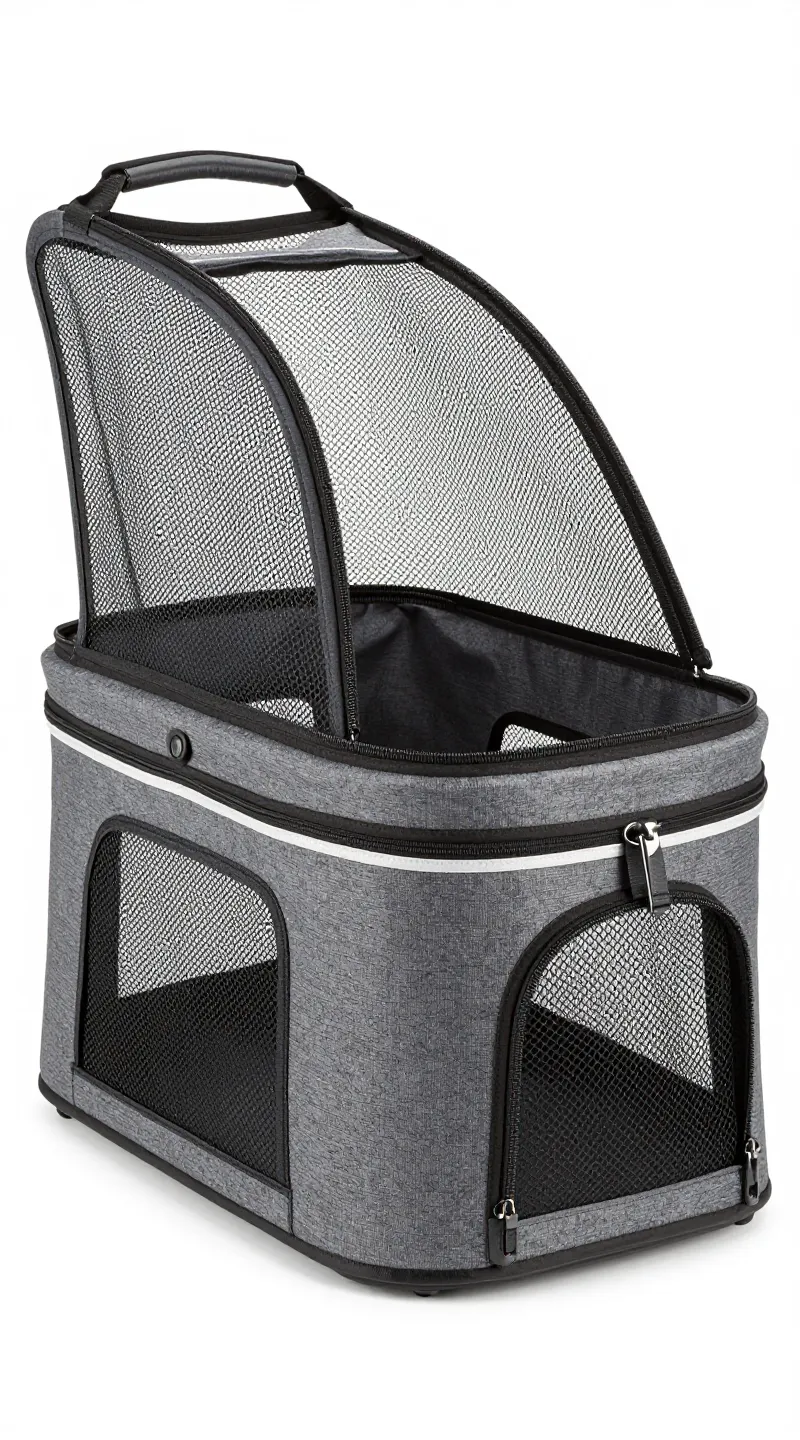
Soft-siders shine for air travel and quick errands. They weigh less, flex under seats, and store easily. Many pets also feel calmer in a cozier “den.”
Best for: Small dogs and cats up to ~15 lbs, airline cabin travel, vet visits.
What to look for:
- Structured base so it doesn’t collapse on your pet.
- Multiple mesh panels for visibility and airflow.
- Lockable zippers and leash tether inside.
- Luggage sleeve to slide onto suitcase handles = elite airport move.
Top Picks IMO
- Sherpa Original Deluxe: Classic for a reason. It’s airline-friendly, has a spring-wire frame to fit under seats, and a comfy liner. Not fancy, but reliable.
- Sleepypod Air: Premium build, safety-first vibe, compresses to fit airline rules. Pricey, but sturdy and chic. Great for anxious pets.
- Amazon Basics Soft-Sided: Budget win. Solid ventilation, removable fleece bed, and multiple sizes. Not as durable as premium options, but gets the job done.
Hard-Sided Carriers: Durable, Secure, Easy to Clean
When your cat morphs into a chainsaw at the vet, hard-sided carriers win. They resist claw attacks and clean up fast.
Best for: Vet visits, car travel, scratch-happy cats, tiny dogs who like more structure.
What to look for:
- Front and top doors for easier loading.
- Metal doors/latches for durability.
- Sturdy shell that doesn’t flex.
Top Picks IMO
- Petmate Two-Door Top Load: The top door is a lifesaver with reluctant pets. Tough, simple, dependable.
- Ferplast Atlas: Lightweight, solid clips, comfy handle. Looks basic, performs great.
Backpack Carriers: Hands-Free and Adventure-Ready

Backpacks make sense for city walks and public transit. Your pet rides high, you keep both hands, and it feels less awkward than a tote. But go slow and let your pet acclimate; it’s a weird experience at first.
Best for: Confident small dogs and curious cats up to ~12 lbs, walking and short trips.
What to look for:
- Rigid base and solid back support for you.
- Wide, padded straps and chest/waist buckles.
- Mesh sides with roll-down privacy panels.
Top Picks IMO
- Katziela Pet Carrier Backpack: Good structure, breathable mesh, comfy straps. Practical and not too bulky.
- Texsens Bubble/Expandable Backpack: The bubble window is fun, but the real value is the expandable mesh porch for breaks.
Sling and Tote Carriers: Casual, Close, and Cute
Sling carriers and totes work best for quick errands with calm pets. They keep your pet close to your body, which can soothe anxious animals. But they don’t usually offer much structure.
Best for: Confident, calm pets under ~10 lbs, short outings only.
What to look for:
- Safety tether to clip to harness (not the collar).
- Padded strap so your shoulder doesn’t revolt.
- Breathable fabric and some structure so your pet doesn’t feel like a sack of potatoes.
Top Picks IMO
- Tomkas Small Pet Sling: Simple, cozy, and affordable. Best for tiny dogs who love cuddling.
- PetAmi Deluxe Tote: More structure and pockets than a basic sling. Good middle ground.
Airline Travel: Don’t Get Stopped at the Gate

Airlines all have slightly different rules because of course they do. You need a carrier that fits under the seat and a pet that can stand and turn around (according to the airline—not always your pet’s opinion).
Checklist before you fly:
- Check the airline’s pet policy for dimensions and breed/weight restrictions.
- Choose a soft-sided carrier that compresses to fit under the seat.
- Bring absorbent pads, collapsible water bowl, and treats.
- Practice time: Short carrier sessions at home with treats so your pet doesn’t hate you.
- ID tags and microchip with current info. FYI, airline staff love visible tags.
Carrier Dimensions: The Real Talk
Airlines list maximums, but under-seat heights vary by plane. Pick a carrier that’s slightly shorter than the stated height and flexible enough to squish. The Sherpa Original and Sleepypod Air both excel here.
Car Travel: Secure and Crash-Safe
Loose pets in cars distract drivers, and that’s a hard no. Secure your carrier with a seatbelt or place it on the floor behind the front seat. Avoid airbags.
Car safety tips:
- Use a carrier with a seatbelt path or a strap you can thread through.
- Place the carrier on a stable surface, never perched on a seat edge.
- Never attach a tether to a collar in the car—use a well-fitted harness.
- Take breaks every couple hours for water and potty (dogs) or a quiet check-in (cats).
Bonus: Motion-Sickness Hacks
Try shorter pre-trip meals, fresh air (cracked window), and a stable, front-facing position. If your pet still struggles, talk to your vet about anti-nausea meds. IMO, practice rides work wonders.
Sizing: Measure Twice, Buy Once

Eyeballing size leads to returns and regret. Grab a tape measure and do it right.
How to measure:
- Length: Nose to base of tail.
- Height: Floor to top of head or ears—whichever is taller.
- Weight: Check the carrier’s weight limit and don’t flirt with it.
Fit check:
- Your pet stands and turns around without crunching their spine.
- They can lie down fully without their nose squishing into mesh.
- The carrier doesn’t sag like a hammock when you lift it.
Comfort Upgrades Your Pet Will Love
A few small tweaks can turn “meh” into “zen.”
- Swap the base pad for thicker memory foam or a plush liner.
- Add a familiar blanket or T-shirt so it smells like home.
- Use calming aids like pheromone sprays or a favorite toy.
- Privacy mode: Drape a light cover over one side if your pet gets overstimulated.
FAQs
How long can my pet stay in a carrier?
Aim for 2-4 hours between stretch breaks for dogs, shorter for puppies. Cats can handle longer stretches if they feel secure, but offer water and a quiet check-in. On flights, use absorbent pads and keep breaks calm and brief.
Do I need an airline-approved carrier?
“Airline approved” is mostly marketing. Check your airline’s exact dimensions and requirements. Choose a carrier that flexes to fit under the seat and meets ventilation rules, then you’re golden.
Which carrier works best for anxious pets?
Go for structured, soft-sided carriers with top access, cozy padding, and the option to partially cover the mesh. The Sleepypod Air or a hard-sided top-load with a plush liner both help. Practice at home with treats until the carrier feels safe, not scary.
Can I use a backpack carrier for long hikes?
Short hikes? Sure. Long treks? Only if the backpack supports your back and your pet sits comfortably with great airflow. Take breaks often and watch for overheating—pets can’t unzip themselves and complain (well, not verbally).
What if my cat hates carriers?
Leave the carrier out at home like furniture with treats inside. Feed meals in it, toss toys in it, and never use it only for “scary vet time.” Top-loading hard carriers make loading less dramatic, IMO.
Bottom Line: Pick the Carrier That Matches Your Life
You don’t need the fanciest carrier—you need the one you’ll use without swearing. If you fly, grab a soft-sided, structured option like the Sherpa or Sleepypod. For vet days and claw-happy cats, hard-sided, top-load rules. City walkers? A well-ventilated backpack makes it fun. Add a comfy pad, do some practice sessions, and boom—stress down, adventures up.
Explore iPet Choice
Discover helpful pet care tips, trusted product recommendations, and practical guides for dogs, cats, fish, and more.