You brought home a feathery roommate. Congrats—and welcome to the loud, glittery world of bird ownership. Your new buddy can charm you senseless and also scream like a smoke alarm. Let’s give them a great life while keeping your sanity intact. Here’s how to set up a happy, healthy home for your bird without turning your living room into a seed-based disaster zone.
Choose the Right Bird (Before You Choose the Cage)
Not all birds want the same lifestyle. Some birds love constant attention, while others vibe with calm routines and gentle hangouts. Pick a species that fits your energy and schedule.
- Budgies and cockatiels: Friendly, social, great for beginners.
- Lovebirds and conures: Loads of personality, need more interaction.
- Parrots (African greys, Amazons): Brilliant, demanding, long-lived—like toddlers with wings.
If you already have your bird, awesome. Learn your species’ quirks. Diet, noise level, lifespan, and cage size vary wildly. FYI: “starter bird” doesn’t mean “low effort.” It means “less likely to eat your drywall.”
Set Up a Safe, Spacious Home Base
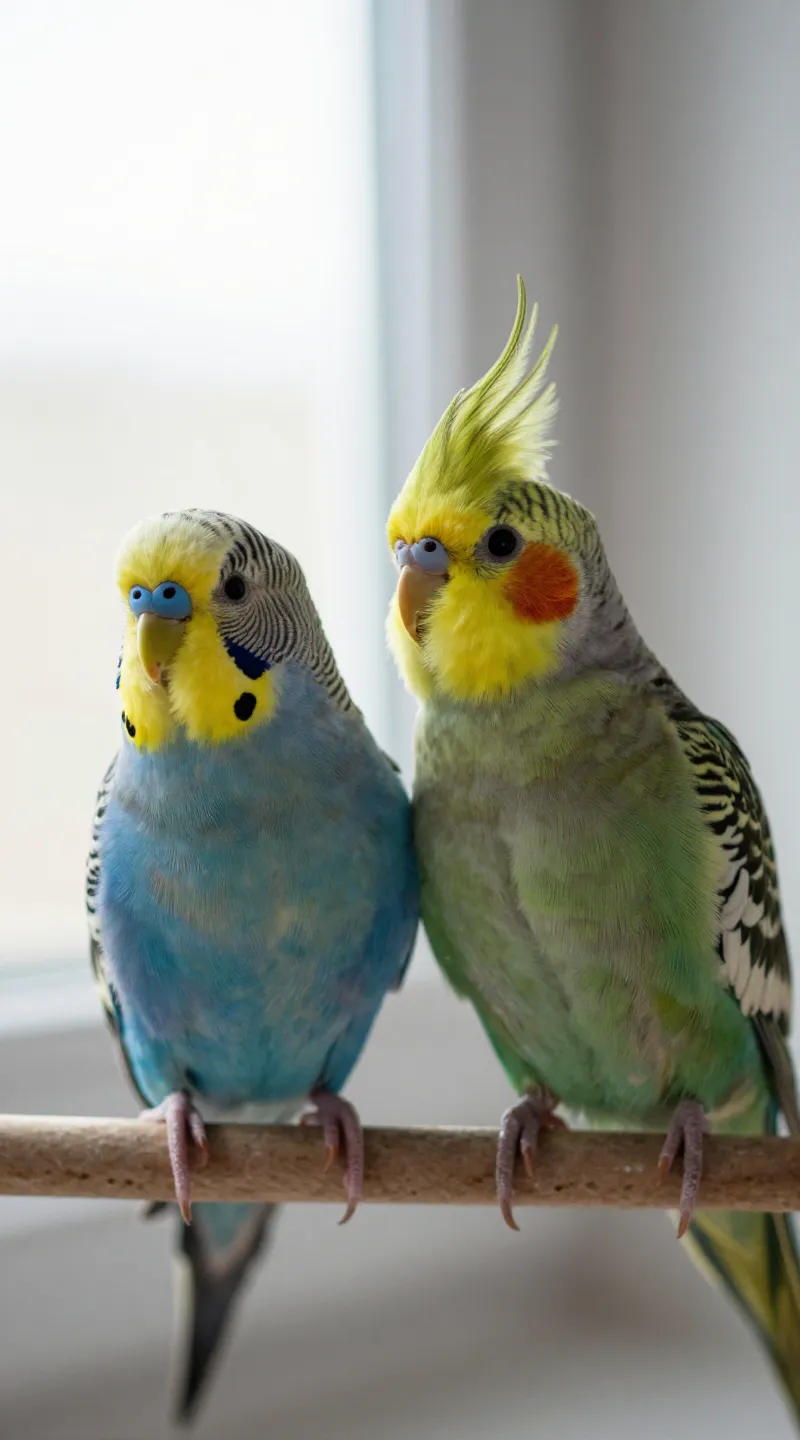
Your bird’s cage is home, gym, cafe, and nap spot. Choose one that gives them room to spread wings, climb, and hop.
- Size: Bigger always beats smaller. Your bird should flap fully without whacking bars.
- Bar spacing: 1/2″ for small birds (budgies), 5/8″–3/4″ for cockatiels/conures, 1″–1.5″ for larger parrots.
- Material: Powder-coated or stainless steel. Avoid rust or flaky paint.
- Door design: Easy to access. Lockable if your bird moonlights as Houdini.
Perches: Skip the Sandpaper Stuff
Mix textures to keep feet healthy and nails naturally trimmed.
- Natural wood (manzanita, dragonwood): Best for grip and foot health.
- Rope perches: Cozy, but check for frays.
- Cement/perch pedicure: Use as one perch only, not the main hangout.
Location, Location, Location
Put the cage in a bright, draft-free spot where people hang out. Birds want to be included, not marooned. Keep it away from the kitchen (fumes + hot surfaces = danger). And never near scented candles, aerosols, or nonstick cookware fumes. Yes, Teflon still causes issues. Don’t risk it.
Build a Diet That Actually Fuels Them
Seeds alone? That’s bird junk food. Yummy, yes. Balanced, no. Aim for variety and color.
- Base: High-quality pellets (60–70% of diet), sized for your bird.
- Fresh foods: Veggies daily (leafy greens, peppers, carrots, broccoli). Fruit sparingly.
- Seeds and nuts: Treats or training rewards, not the whole meal plan.
- Fresh water: Change daily—twice if your bird bathes in it (they will).
Foods to Avoid
- Never: Avocado, chocolate, caffeine, alcohol, onion, garlic, xylitol.
- Go easy on salty, sugary, or fatty human foods.
- Wash produce thoroughly. Pesticides aren’t seasoning.
Daily Enrichment: Prevent Boredom (and Couch Destruction)

A bored bird invents “projects.” You won’t like them. Keep brains and beaks busy.
- Toys: Rotate weekly. Include shreddables (paper, palm), foraging toys, bells, and puzzles.
- Foraging: Hide pellets in paper cups, cardboard, or store-bought puzzle feeders.
- Training: Short sessions (5–10 minutes). Use treats to teach “step up,” “target,” and recall.
- Out-of-cage time: Aim for daily sessions in a safe, bird-proofed area.
Easy Training Wins
- Step up: Present finger/perch at belly, say “Step up,” reward when they move.
- Targeting: Tap a stick, reward beak touch—use it to guide them around calmly.
- Recall: Start close, call their name, reward when they come. Gradually increase distance.
Cleanliness Without Losing Your Mind
Yes, birds are messy. No, you don’t need to wage a daily war. Build a system.
- Daily: Change cage liner, swap water, remove wet food, quick wipe of perches and bars.
- Weekly: Wash toys, scrub tray and grate, rotate perches.
- Monthly: Deep clean cage with bird-safe cleaner (diluted white vinegar works). Rinse like you mean it.
- Floor hacks: Use a mat under the cage. Seed guards help, but not with launch velocity.
Bath Time
Most birds love water—once they trust it.
- Mist with a spray bottle or offer a shallow dish.
- Use lukewarm water, no soap.
- Let them air-dry away from drafts. No hairdryers—too hot and risky.
Sleep, Safety, and Routine

Birds thrive on predictable patterns. Chaos equals cranky parrots.
- Sleep: 10–12 hours of dark, quiet rest nightly. Cover the cage if it helps.
- Lighting: Natural light cycles support hormones. Consider full-spectrum lighting if your home lacks sunlight.
- Bird-proofing: Close windows/doors, turn off fans, hide cords, and supervise shoulder time.
- No fumes: Skip scented oils, incense, harsh cleaners, nonstick pans. Your bird’s lungs are tiny but mighty sensitive.
Health Basics You Shouldn’t Ignore
You can’t ask your bird how it feels, so you need to watch like a hawk. Pun intended.
- Weigh weekly: Use a gram scale. Sudden drops signal trouble.
- Poop check: Changes in color/consistency can flag diet or health issues.
- Beak/feather condition: Overgrown beak, plucking, or dull feathers need attention.
- Breathing: Tail bobbing, wheezing, open-mouth breathing = vet time ASAP.
Find an Avian Vet
Not every vet sees birds. Line up an avian vet before you need one. Schedule annual wellness exams, and go sooner if anything feels off. IMO, this is the difference between small problems and big emergencies.
Bonding Without Creating a Velcro Bird

You want a buddy, not a bird who panics when you leave the room. Balance affection with independence.
- Set routines: Consistent feeding, training, and hangout times build trust.
- Teach solo play: Offer toys and foraging activities inside the cage during short alone periods.
- Respect boundaries: Watch body language—pinned eyes, flared tail, lunges = “not now, thanks.”
- Use your voice: Chat across the room. Birds love being part of the conversation, even when they’re not on you.
Reading Body Language
- Relaxed bird: Fluffy feathers, soft chirps, one foot tucked.
- Curious bird: Upright posture, gentle eye focus, head tilts.
- Overstimulated: Rapid head movements, pinning eyes, loud calls. Time for a break.
FAQ
How often should I let my bird out of the cage?
Aim for at least 1–2 hours daily, broken into shorter sessions if needed. Bigger birds often need more. Pair out-of-cage time with training or foraging so it stays purposeful, not chaotic.
Do birds need companions of the same species?
Not always. Many birds thrive solo with lots of human interaction and enrichment. If you work long hours, a second bird can help, but introduce slowly and plan for separate cages in case they don’t become BFFs. FYI: You can’t force a friendship.
What’s the best way to switch from seeds to pellets?
Go gradual. Mix a small amount of pellets into their usual seed, then slowly increase pellets over 2–4 weeks. Try offering pellets first in the morning when they’re hungry, and use warm, soft foods (like soaked pellets) to tempt picky eaters.
My bird screams—how do I stop it?
First, identify why: attention, boredom, or fear. Reward quiet moments with attention and treats, and ignore attention-seeking shrieks (yeah, it’s hard). Increase enrichment and training. Never punish; it builds anxiety and more noise. IMO, a tired, stimulated bird screams less.
Can I clip my bird’s wings?
That’s a personal and safety call. Many owners keep birds fully flighted and train recall in a secure space. If you clip, ask an avian vet to do a conservative, humane trim. Flight is exercise and confidence-building, so consider training and bird-proofing first.
Do birds need vitamin supplements?
If your bird eats a balanced pellet-based diet with veggies, you rarely need extra vitamins. On seed-heavy diets, your vet may recommend supplements. Always check with an avian vet before adding anything.
Conclusion
Caring for a bird isn’t just food and a cute perch. It’s routines, training, enrichment, and lots of observation. Give your bird space to move, food that fuels, toys that challenge, and sleep that restores. Do that, and you’ll earn a chatty, confident sidekick who lights up your home—without redecorating it in seed shells. IMO, that’s a win for both of you.
Explore iPet Choice
Discover helpful pet care tips, trusted product recommendations, and practical guides for dogs, cats, fish, and more.