You glanced at your aquarium and saw… milk? Fog? A tiny storm cloud? Cloudy fish tank water freaks out every new aquarist—and plenty of experienced ones too. Good news: it’s fixable. Better news: it usually means your tank is doing exactly what new tanks do. Let’s decode the haze and get your water crystal clear without turning your tank into a chemistry lab.
First, identify the type of cloudiness
Not all cloudy water is the same. Before you panic, figure out what kind of “cloudy” you’ve got.
- White or gray haze: Usually a bacterial bloom. Super common in new tanks or after you’ve cleaned too aggressively.
- Green tint: Free-floating algae. Your tank basically made pea soup.
- Brown or tea-colored: Tannins from driftwood or botanicals. Totally normal and sometimes even desirable.
- Particles floating: Dust from substrate or disturbed debris. Harmless but ugly.
FYI: gray-white haze happens way more than any other kind. If your tank is new, odds are high you’re just seeing the nitrogen cycle in action.
White or gray haze: the “new tank” classic
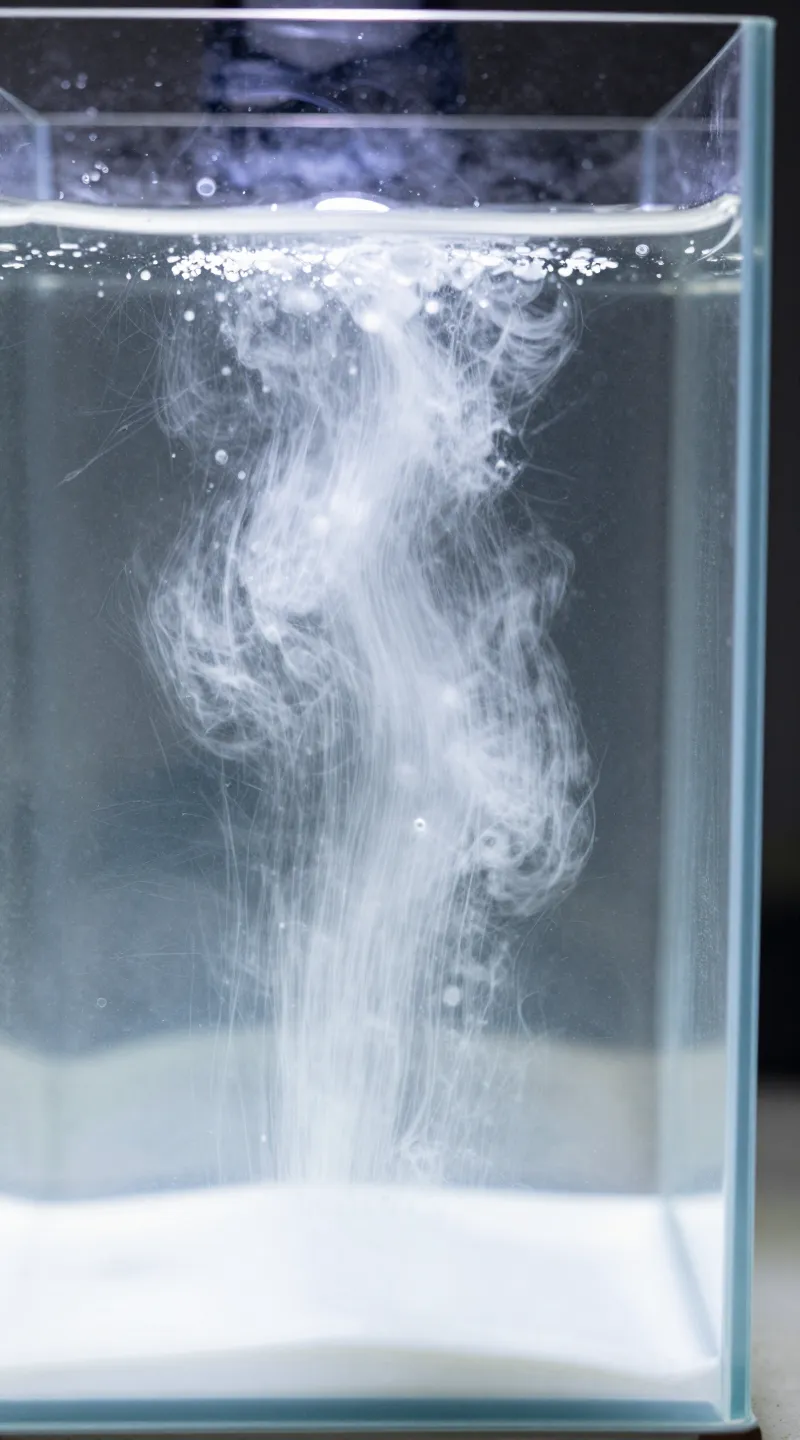
Bacterial blooms look like someone added milk. They show up in new setups, after deep cleanings, or when you overfeed.
Why it happens
You’ve got beneficial bacteria colonizing your filter and surfaces. They multiply fast when they find nutrients (like leftover food or fish waste) and cloud the water. It looks bad, but it often means your tank is establishing balance.
How to fix it (and not nuke your cycle)
- Stop overcleaning: Don’t rinse your filter media under tap water—chlorine kills your bacteria. Swish gently in a bucket of tank water.
- Feed less: Tiny portions your fish finish in 30–60 seconds. No buffet.
- Do small water changes: 20–30% every few days. Don’t replace 90% unless there’s an emergency.
- Use a good filter: Ensure you have enough biological media. Sponge filters and biomedia rings are MVPs.
- Consider bottled bacteria: Can help stabilize things faster, IMO.
Don’t add clarifiers or nuke the tank with meds. That just resets the cycle and keeps you stuck in cloudy limbo.
Green water: the algae bloom saga
Green water looks like you blended spinach. It’s algae—specifically, free-floating microalgae. It loves light and nutrients.
What triggers it
- Too much light: Sunlight hitting the tank or lights running 12+ hours.
- High nutrients: Nitrates and phosphates from overfeeding or infrequent water changes.
- Unbalanced plants: Live plants help—but if they’re not thriving, algae gladly steps in.
How to clear it fast
- Cut the light: 6–8 hours only. Move the tank out of direct sun. Try a 2–3 day blackout if it’s bad.
- Do back-to-back water changes: 30–50% every few days while you fix the root cause.
- Add a fine filter stage: Polishing pads or a micron cartridge can trap teeny algae cells.
- Consider a UV sterilizer: Overkill for some tanks, but it works ridiculously well.
- Grow real plants: Fast growers like hornwort or water sprite outcompete algae.
Skip algaecides unless you like dead algae rotting and spiking ammonia. Not cute.
Brown or yellow tint: tannins from wood
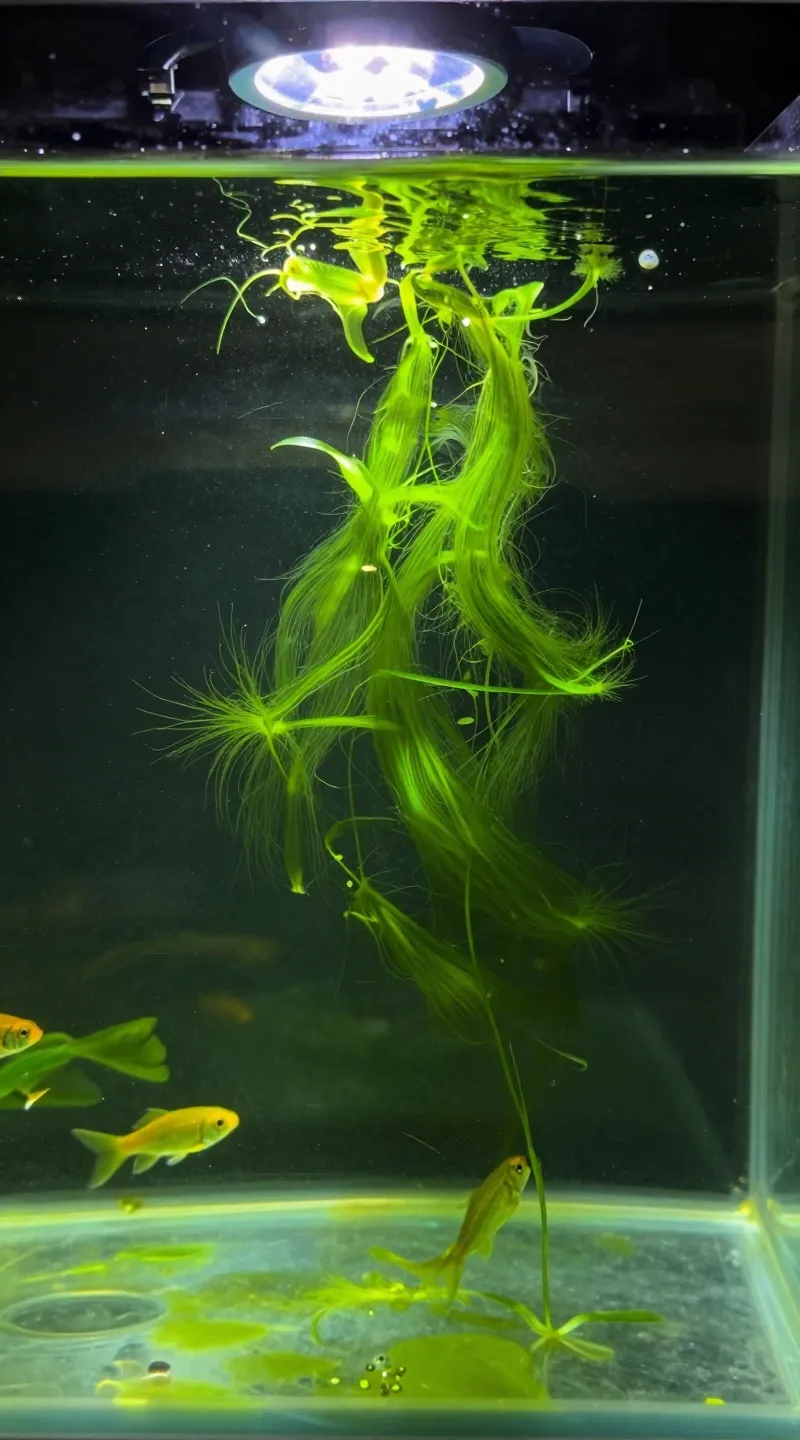
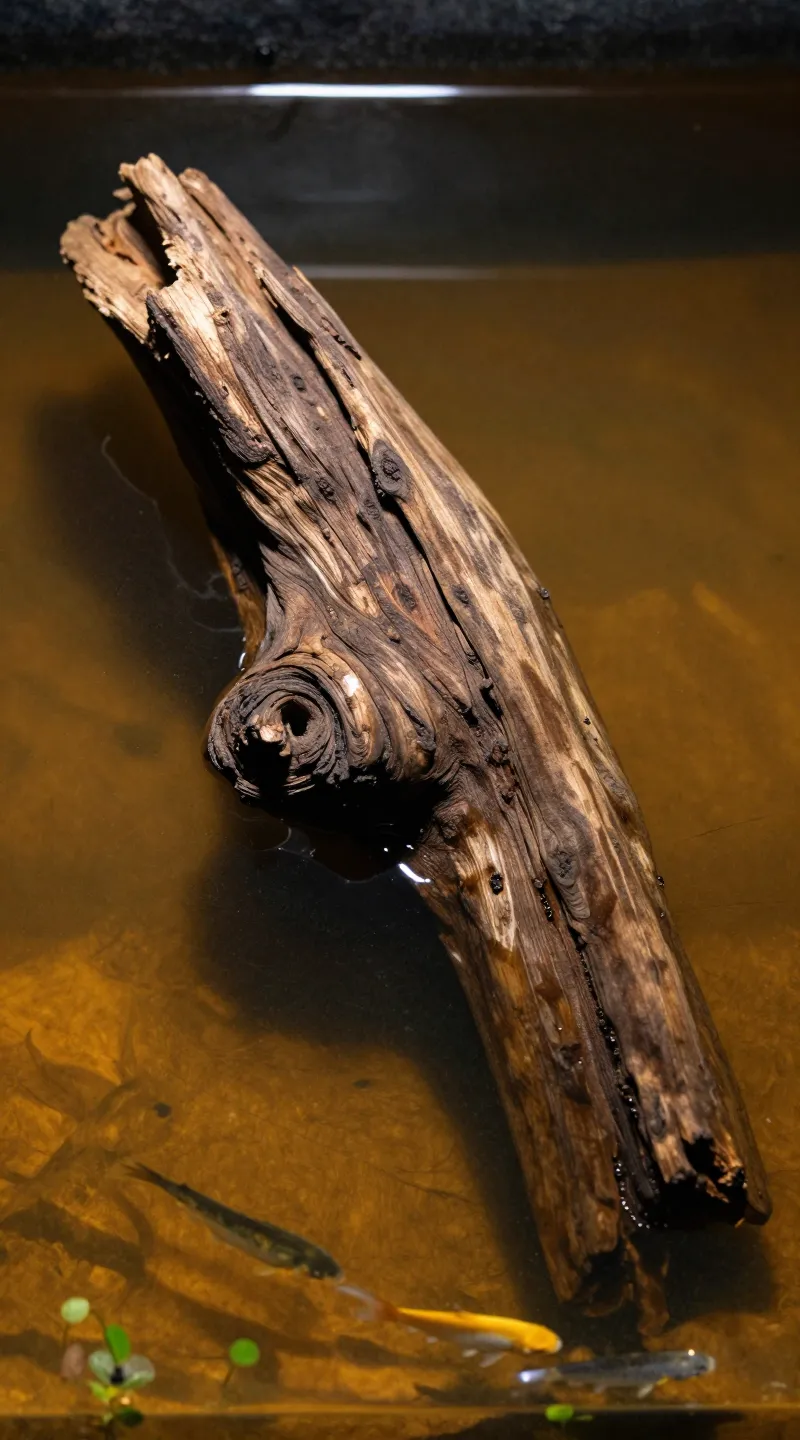
If your water looks like weak tea, blame driftwood, catappa leaves, or botanicals. That’s tannins. Many keepers love the “blackwater” look because it’s natural and can be soothing for fish.
When it’s fine, when it’s not
- Safe and normal: Tannins don’t harm fish and can even have mild anti-fungal/anti-bacterial properties.
- If you hate the color: Pre-soak wood, run activated carbon or Purigen, and do regular water changes.
Want crystal-clear water? Activated carbon in your filter will pull out the tint fast.
Floating particles: dust, debris, and “I stirred the sand”
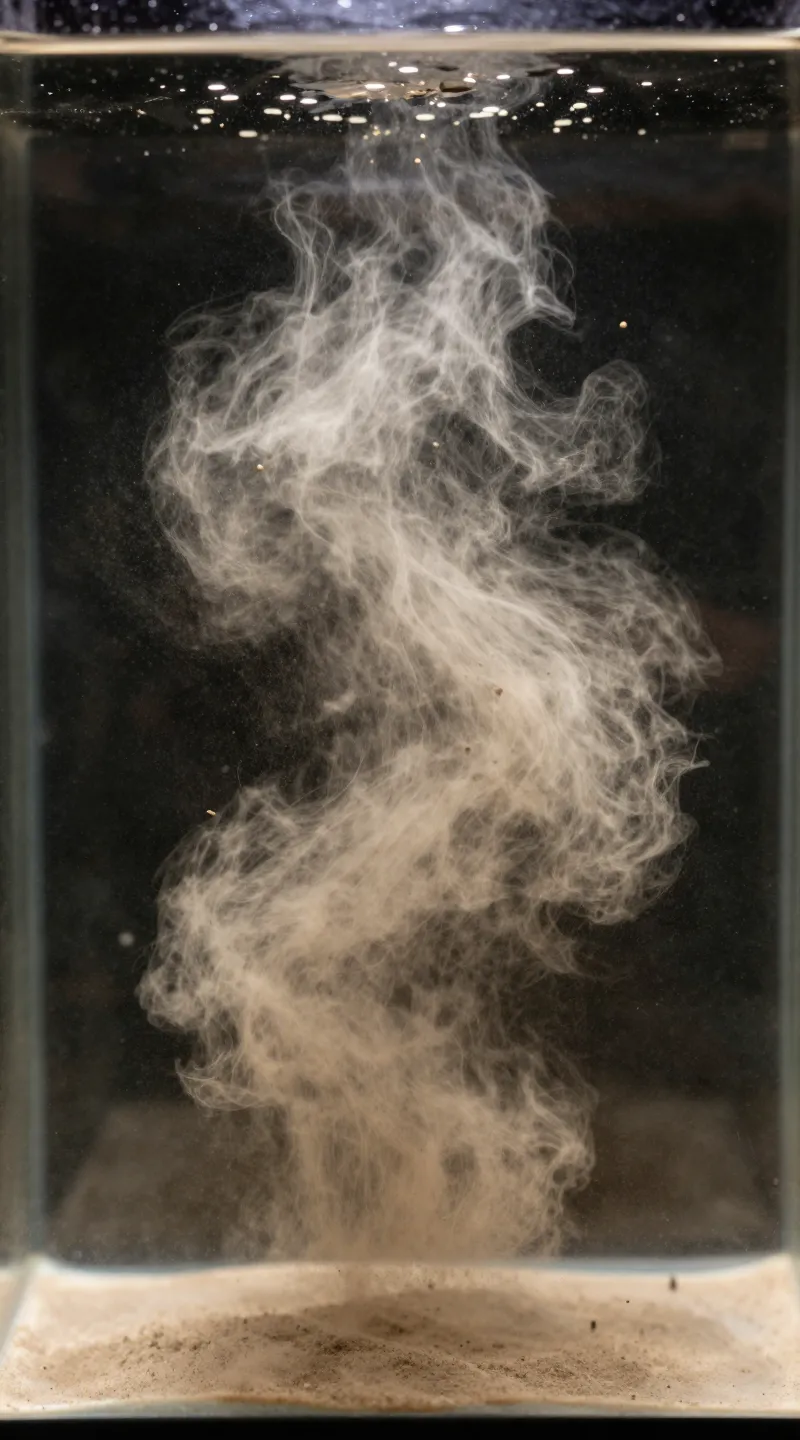
Sometimes the water looks snowy, with tiny bits drifting around. That’s just physical stuff not caught by your filter.
Quick fixes
- Rinse new substrate thoroughly before adding.
- Add filter floss or a polishing pad as a final stage in your filter.
- Vacuum the substrate during water changes to remove gunk.
- Turn down the flow if your filter blasts the bottom and kicks up debris.
Warning: Don’t overclean sand. Gentle passes are enough or you’ll stir up a dust storm.
Water parameters: test, don’t guess
Cloudy water often points at imbalance. A test kit saves you from guessing and YouTube rabbit holes.
What to test
- Ammonia: Should be 0 ppm. Any detectable ammonia means stress for fish.
- Nitrite: Also 0 ppm. Spikes during cycling.
- Nitrate: Keep under 20–40 ppm, ideally lower for sensitive species.
- pH and KH: Stability matters more than chasing a “perfect” number.
If ammonia or nitrite show up, you’re either cycling or your biofilter struggles. Cut feeding, add bacteria, and do partial water changes until stable.
Common mistakes that keep water cloudy
- Overfeeding: The number one cause of everything gross in aquariums.
- Overcleaning filters: You need bacteria. Don’t bleach their home.
- Rushing the cycle: Add fish slowly. Let bacteria catch up.
- Too much light: Your plants love it; algae loves it more.
- Skipping maintenance: Small, regular water changes beat big emergency ones.
IMO, a cheap liquid test kit and a calendar reminder for weekly water changes solve 80% of aquarium drama.
When to worry
Most cloudiness doesn’t equal disaster, but sometimes you need to act fast.
- Fish gasping at the surface: Add aeration, test ammonia/nitrite, and do a partial water change immediately.
- Strong rotten smell: Could indicate decay or a crashed cycle.
- Sudden fish deaths: Stop feeding, test water, and consider moving surviving fish to a stable, cycled tank if you have one.
If your tests read fine and fish act normal, give the tank a few days. Nature sorts itself out more often than we think.
FAQ
How long does new tank cloudiness last?
Usually 2–7 days, sometimes up to two weeks in brand-new tanks. Keep feeding light, avoid deep cleanings, and let the bacteria settle. If it lasts longer, test ammonia and nitrite to make sure your cycle didn’t stall.
Will a water clarifier help?
It can clump particles so your filter grabs them, but it doesn’t fix the cause. For bacterial blooms or algae, a clarifier is a band-aid at best. Fix feeding, filtration, and lighting first.
Can cloudy water harm my fish?
The cloudiness itself usually doesn’t, but the cause might. Bacterial blooms can follow ammonia spikes, and algae blooms can crash oxygen at night. Test your water and bump aeration if fish breathe rapidly or hang at the surface.
Should I clean the filter if the water turns cloudy?
Only if the flow dropped. Then rinse the media gently in old tank water to remove gunk. Don’t replace all your media at once or you’ll toss your biofilter and restart the cycle—cloud city returns.
Do snails or plecos fix cloudiness?
Cute idea, but no. They help with some algae and leftover food, but they also poop (a lot). Livestock shouldn’t replace maintenance and good filtration.
Is carbon necessary to clear water?
Not necessary for normal operation, but carbon shines for tannins, meds removal, and weird smells. For green water or bacterial blooms, carbon won’t do much—go with UV, better filtration, and light control.
Bottom line
Cloudy tank water looks scary, but it usually signals a tank finding its balance. Diagnose the type of cloudiness, test your water, and tweak feeding, filtration, and lighting. Keep changes small but consistent, and resist the urge to overclean. Give it a little time and your aquarium will go from foggy mystery soup to glass-box bragging rights—no magic potions required, IMO.
Explore iPet Choice
Discover helpful pet care tips, trusted product recommendations, and practical guides for dogs, cats, fish, and more.